Get ready for your license test with AI assistance!
What must you do after attaching a semitrailer?
Check the fastening and locking system of the fifth wheel
Connect and check all hoses and cables
Release the reverse lock of the semitrailer
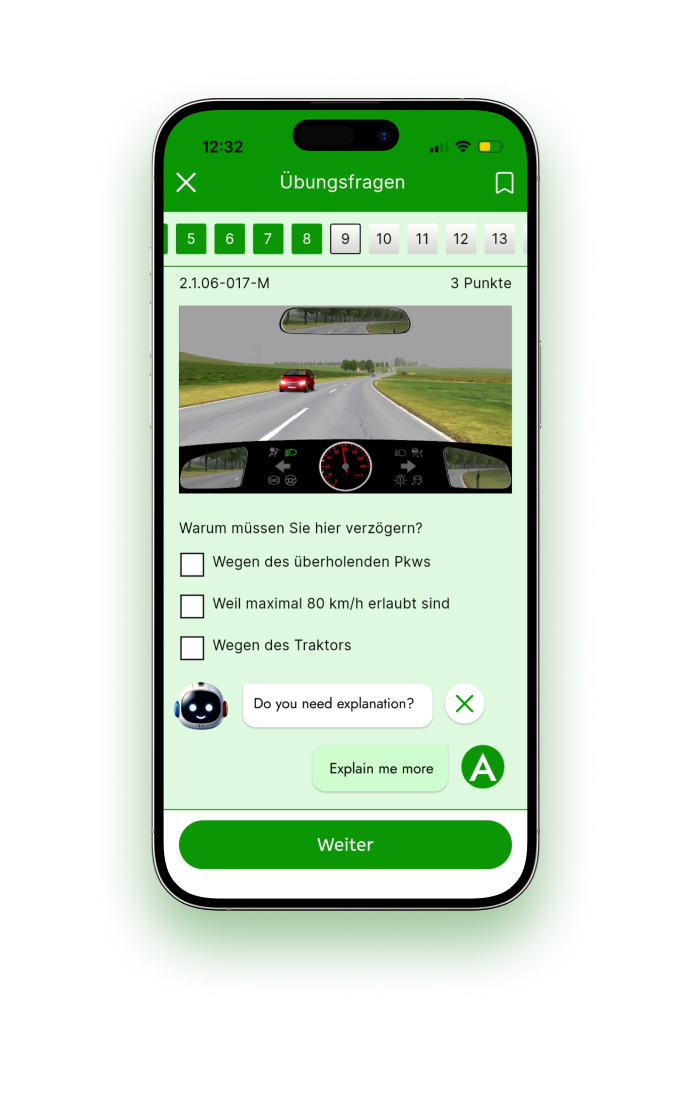
Here is Our AI Assistant's Explanation
After coupling a semitrailer, you must make sure the mechanical connection is truly locked and the supply lines work, because a partly coupled trailer or a missing connection can lead to the trailer coming loose or to brake/lighting failures while driving.
Answer 1 is correct because the fifth wheel is what carries and secures the trailer’s kingpin. You need to confirm the locking jaws have fully engaged around the kingpin and that the locking mechanism is secured. Rule of thumb: don’t rely on the “clunk” sound alone—visually check the lock/indicator and make sure the trailer is sitting correctly on the fifth wheel (no “high coupling” where it rests on top without being locked).
Answer 2 is correct because the semitrailer needs air, electrics (and possibly ABS/EBS) to be safe and legal. After connecting, you must ensure the air lines are correctly assigned and tight (so the brakes release and recharge properly) and the electrical connection works (lights, indicators, brake lights, and trailer systems). A practical rule for similar questions: coupling always includes “mechanical lock + lines connected + function check.”
Answer 3 is not required as a general must-do step after attaching, because not every semitrailer has a “reverse lock” that needs releasing, and it’s not part of the standard coupling safety checks tested here. The key mandatory points are securing the fifth wheel and ensuring all hoses/cables are connected and functioning.